Spreadsheets vs BJJ Gym Management Software: When Is It Time to Switch?
By iRoll BJJ
A spreadsheet can run a BJJ academy perfectly well for a while. If one person handles the admin, the timetable is simple and everyone knows which file is current, there may be no urgent reason to replace it.
The time to switch isn’t when your academy reaches a particular number of members. It is when the spreadsheet stops being a useful record and starts creating work: details are copied between systems, coaches can’t trust what they see, payments or enquiries get missed, and routine questions still depend on the owner.
Don’t move because the sheet looks untidy. Move when the way you run the academy needs shared, connected processes that a spreadsheet cannot handle well.
What spreadsheets are good at
Spreadsheets are cheap, flexible and familiar. You can create a member list in an afternoon, add the columns you need and export the data whenever you like.
They are often enough when:
- one person keeps the records;
- changes are occasional;
- payments are simple and checked elsewhere;
- attendance or grading records are basic;
- staff can get the information they need without asking the owner;
- the file is backed up and access is controlled.
That last point matters. A spreadsheet is not automatically a bad system, but an old copy on someone’s laptop isn’t much of a system at all.
Signs the spreadsheet is becoming the problem
There is rarely one dramatic failure. The extra admin simply builds up, and you spend more time copying details, checking records and fixing mistakes.
| What you notice | What is really happening |
|---|---|
| Staff keep asking which file is current | You no longer have one trusted member record |
| Membership status is checked in a payment dashboard and then copied into a sheet | Billing and member records are disconnected |
| Attendance is recorded on paper and typed up later | The same work is being done twice |
| Enquiries sit in email, Instagram and personal messages | Follow-up depends on someone remembering |
| You’re unsure when members last received a belt or stripe | Promotion records aren’t being kept up to date |
| Only the owner can explain what a row means | The process lives in one person’s head |
One of these problems may be fixable with a cleaner sheet. Several happening every week usually means the tool no longer matches the job.
You keep copying the same information
A new student fills in a form. Someone copies their details into the member sheet, creates a payment, adds them to a class list and later updates their belt record somewhere else.
Each copy creates another place that can be wrong. A changed email address reaches one file but not another. A cancelled membership still looks active at check-in. Even the most careful people miss updates when the same change has to be made in several places.
Other people need the information
A private spreadsheet is manageable while the owner handles everything. It becomes awkward once coaches or front-desk staff need current answers.
They should be able to see whether someone is an active member, when they last trained and what class they are attending without messaging you during warm-up. Giving everyone full access to the spreadsheet is brave. People make small, helpful “improvements”, columns move, formulas change and eventually nobody trusts it. Staff need the right information, not permission to edit the whole system.
Follow-up depends on memory
Rows can store dates and statuses, but they do not naturally remind someone to act. A failed payment, quiet member or unanswered enquiry can sit there looking impressively organised while nobody does anything about it.
If you have built colours, filters and calendar reminders around the sheet, ask whether the spreadsheet is still saving work or whether you have started building gym software one formula at a time.
Spreadsheets also become fragile as they grow. One deleted formula, changed column or accidental sort can quietly damage the records or reports that depend on it.
Members need to do things themselves
A spreadsheet is mainly an internal record. It does not give members a reliable place to check the timetable, manage bookings, view their membership or check in.
You can bolt separate tools onto it, but every extra tool creates another login and another place to update. That may still be acceptable. The problem starts when staff spend their time joining those pieces together by hand.
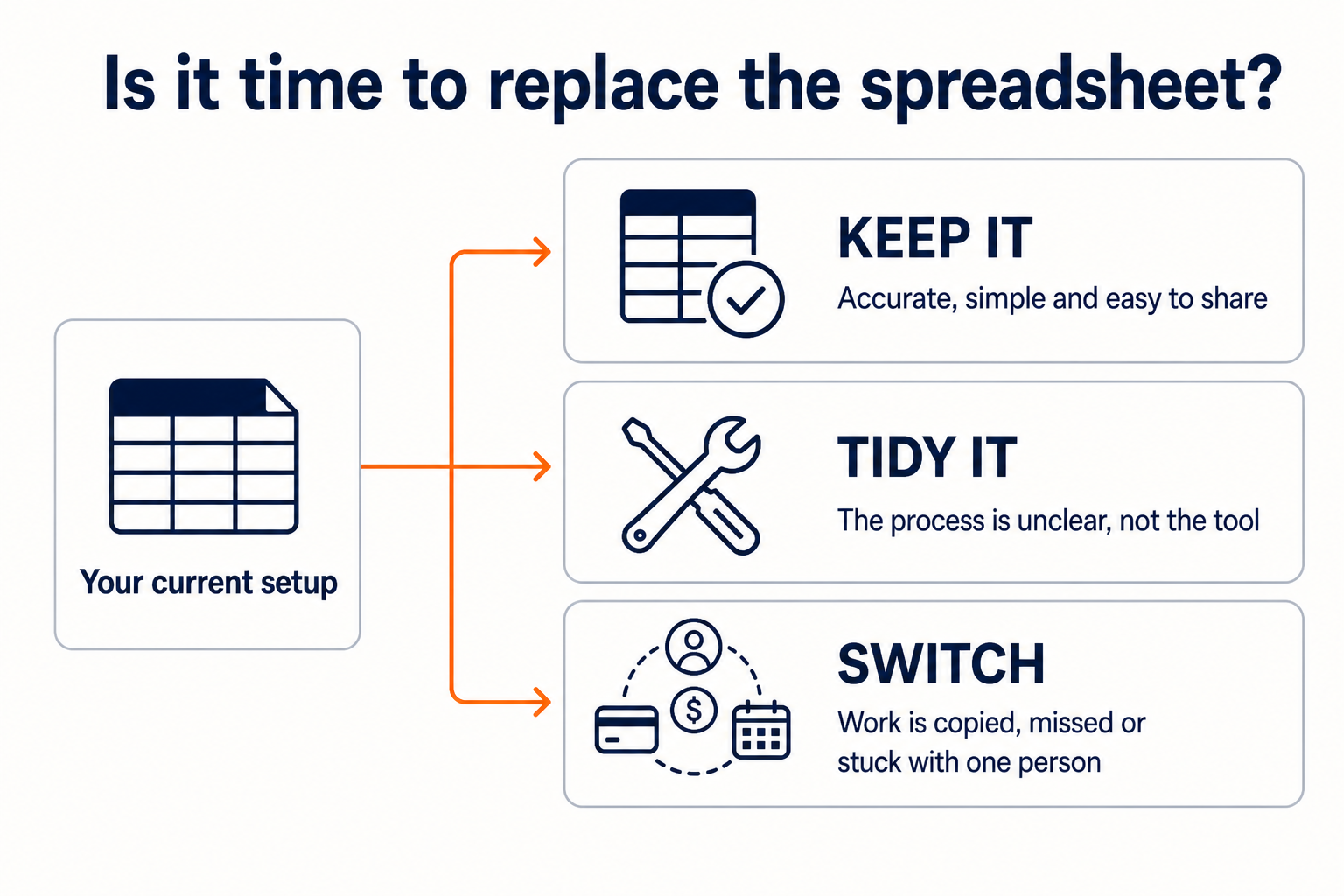
Decide whether to keep, tidy or switch
Before buying anything, work out which of these three situations you are in.
Keep the spreadsheet
Keep it if it remains accurate, one person can maintain it without much effort and nobody is missing important work because of it.
Make the file easier to trust: use one master copy, agree what each status means, remove unused columns, limit access and keep a backup. A simple system used consistently beats complicated software nobody opens.
Tidy the process
Sometimes the spreadsheet isn’t the real problem. Perhaps enquiries arrive everywhere, attendance is never recorded at the door or membership plans are unnecessarily complicated.
Fix that process first. Software will not decide who replies to an enquiry or what your cancellation policy should be. It can make a clear process easier to run, but it cannot rescue a process nobody has agreed on.
Switch to gym management software
Dedicated software becomes worthwhile when several people need the same current information, recurring tasks are being missed, members need self-service, or you want payments, attendance, enquiries and belt history connected to one student record.
The goal is not to own more software. It is to stop maintaining the joins between several systems yourself.
Choose the first problem you want software to solve
Once you’ve decided to switch, don’t start with a feature list. Focus on the two or three jobs causing the most repeated work, then ask each provider to show those jobs end to end. What BJJ gym management software should actually do covers the main academy jobs worth testing. When you’re ready to compare products, use how to choose BJJ gym management software.
Where iRoll BJJ fits
iRoll BJJ is BJJ gym management software that connects member management, membership billing, class scheduling and check-in, lead management and belt and stripe tracking.
That connection is the useful difference from a spreadsheet: a payment status, attendance record or promotion does not have to be copied back to a separate member list. But the same rule applies to iRoll BJJ as any other product. Test it against the real jobs your academy needs to fix.
There’s no prize for leaving spreadsheets early. The useful question isn’t whether software is more advanced than your spreadsheet. It is whether it makes an ordinary week at your academy simpler.