BJJ Drop-Ins: Pricing, Payments and Admin
By iRoll BJJ
A visiting student messages at lunchtime asking whether they can train that evening. By the time class starts, nobody knows whether they have paid or signed the waiver. They are standing at the desk with a gi bag while the coach is trying to start warm-up.
A good drop-in process prevents that scene without making a visitor complete the same setup as a monthly member. Set a clear price, collect the details you need and take payment before class where possible.
The main question is whether this person is visiting once or expects to train occasionally. A traveller needs a quick payment and check-in. A local pay-as-you-go student needs a record and class credits.
Decide what kind of drop-in you are dealing with
“Drop-in” can describe two quite different people:
| Type of visitor | A sensible setup |
|---|---|
| One-off visitor | Confirm an appropriate class, collect a waiver and one payment, then record attendance |
| Returning pay-as-you-go student | Create a drop-in record, sell single or packaged class credits, and deduct a credit when they book or attend |
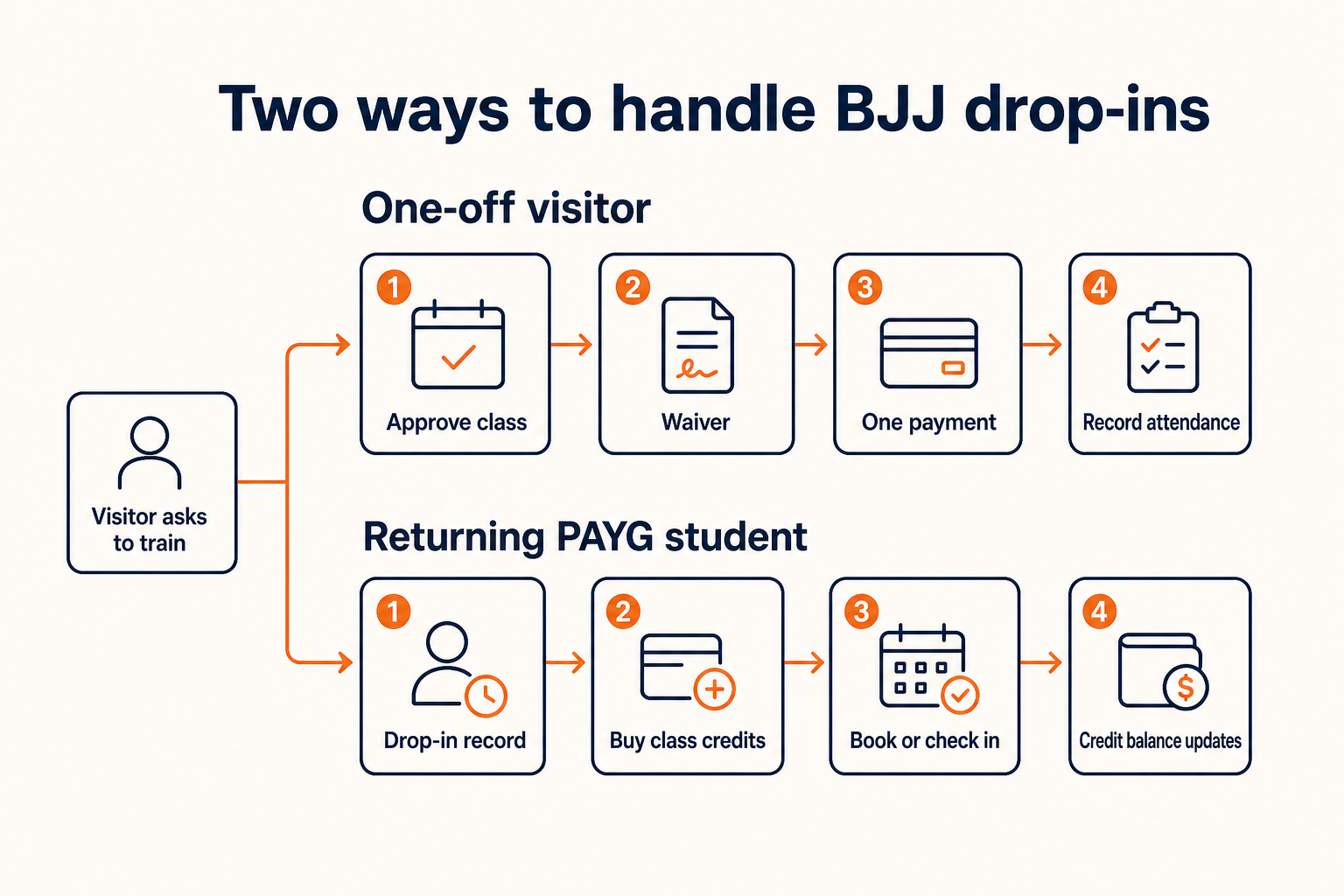
Don’t create a full recurring membership for someone passing through town. It clutters your member list and makes your membership figures less useful.
If someone lives nearby and returns now and then, treating every visit as a new transaction creates unnecessary work. Give them a reusable drop-in record so their waiver, credits, bookings and attendance stay connected. If they later join, move them to membership without losing that history.
Set a drop-in price that makes sense beside membership
There isn’t a standard BJJ drop-in price. Your location, usual membership price, class length, facilities and demand all matter.
Start with the relationship between a drop-in and your own memberships. A single class should offer flexibility, while regular membership should offer better value to someone who trains consistently. If someone can train regularly on drop-ins for much less than your monthly plan, you may have accidentally made avoiding membership the sensible choice.
For example, an academy might charge £15 for one class and offer a small pack at a modest per-class saving. That is only an example, not an industry benchmark. The price should feel reasonable for a traveller, reward someone who returns and still make membership better value for regular training.
Keep the choice simple. One drop-in price and perhaps one small credit pack will be enough for many academies. A long list of bundles creates more decisions for visitors and more products for you to manage.
Say what the price covers, including whether open mat, equipment hire or other locations are included. It is easier to settle that on the website than beside the mats.
You can choose to waive the fee for visiting instructors, affiliated-team members or invited guests. Make that a clear policy rather than leaving each coach to decide.
Collect payment before the rush at the door
Payment before class is usually the cleanest option. Send a checkout link after approving the visit, show a drop-in product on your website or let a returning PAYG student buy credits through your academy app.
That gives you a payment record before the coach becomes receptionist, payment chaser and instructor in the same five-minute window.
Card at the desk can still work, particularly for genuine walk-ins. Cash can work too if you record it consistently. The weak setup is accepting money through several methods and leaving staff to work out who paid from bank notifications, a till and messages to the owner.
Record who paid, what they bought, the amount, payment status and any refund. Use a clear description such as “Adult drop-in, 14 September” rather than “miscellaneous payment”.
Stripe’s Payment Links guidance shows how a hosted checkout can take a one-off payment, and Stripe can send receipts for successful payments and refunds. Stripe for BJJ gyms covers fees, payouts and recurring payments in more detail. Other processors offer similar tools. A clear payment record beats somebody’s screenshot of a transfer.
Get the waiver and essential details before training
A drop-in is still taking part in your class. Use the waiver and emergency-information process required by your academy, insurer and location. Ideally, the visitor completes it before arriving.
Collect what you need to run the visit safely and keep an accurate record, but don’t turn one class into a twelve-page membership application. Usually that means identity and contact details, waiver acceptance, emergency information, relevant training experience and the class attended.
The legal effect of a waiver varies by jurisdiction, so use wording appropriate for your academy and get local advice where needed. A waiver doesn’t replace safe coaching or suitable insurance.
Make credits easy to understand
For returning PAYG students, class credits are cleaner than taking a fresh payment every time.
State how many classes the pack includes, where the credits can be used and what happens after a cancellation.
Be clear about when a credit is used. If booking uses it, cancelling within your allowed window should normally return it. If check-in uses it, decide what happens when someone books but doesn’t turn up.
Use one repeatable drop-in process
A visitor should know which sessions accept drop-ins before paying. Confirm that the class suits their experience, has space and whether they also need to book. A receipt doesn’t reserve mat space unless your process says it does.
A practical one-off visit can follow this sequence:
- Approve the class. Confirm that the session suits their experience and has room.
- Send the essentials. Include the time, location, what to bring, academy rules and parking or entrance details.
- Collect the waiver. Do this before training where possible.
- Take payment. Send a one-off checkout or explain how they will pay at the academy.
- Book or flag the visitor. Make sure the coach knows who is expected.
- Record attendance. A payment record alone does not show that they trained.
- Follow up. Thank a traveller or show a local visitor how to return.
For a returning PAYG student, replace the one-off payment with a drop-in profile and class credits. Give one person responsibility for exceptions and refunds so coaches don’t have to negotiate them as class starts.
Write down cancellations, no-shows and refunds
Write down what happens when the academy cancels, the visitor gives reasonable notice, they cancel late or they don’t attend.
If the academy cancels, return the payment or credit promptly. For visitor cancellations, set a clear cutoff for returning the credit or moving the booking.
You can still make reasonable exceptions for illness, injury or travel problems. Record them so another coach doesn’t issue a second refund later.
Keep drop-ins visible without counting them as members
Keep drop-in payments, credits and attendance visible, but separate them from recurring membership figures. You mainly need to know whether the money, credits and attendance agree.
If a local visitor starts training regularly, mention membership plainly. They may not realise it now offers better value. Don’t send repeated membership messages to one-off visitors who are unlikely to train with you regularly.
For the wider recurring-payment process, see how to manage BJJ gym membership payments. Drop-ins should sit beside that system, not be disguised inside it.
How iRoll BJJ handles the two types of drop-in
For someone unlikely to return, an academy owner or admin can send a one-off Payment Request for a drop-in session. The visitor pays through Stripe Checkout without needing an iRoll BJJ account. The request records whether the payment is open, paid, cancelled or refunded. It collects payment only, so the academy still needs to handle the waiver and attendance.
For someone who will train occasionally, switch on pay-as-you-go (it’s off until you turn it on), then invite them as a drop-in member. They can accept the waiver, buy group class credits and use them for eligible bookings and check-ins. Their attendance stays connected to their student history without pretending they have a recurring membership.
That means one transaction for the traveller and a reusable setup for the person who returns. Member management in iRoll BJJ keeps their record clear, while class scheduling and check-in connects bookings and attendance. Recurring members use membership billing on the same student record.
Frequently asked questions
Should a BJJ drop-in cost more per class than membership?
Usually, yes. A drop-in buys flexibility and creates more administration per visit, while membership gives the academy predictable recurring income. Set the exact amount for your market, but make sure regular attendance is better value on membership.
Can a beginner use a drop-in?
Only if the academy’s drop-in session is suitable for someone with no experience. Often it is better to put a brand-new student through the normal trial and beginner onboarding process so the coach knows they need an introduction rather than treating them like a visiting practitioner.
Make the visit simple for both sides
A drop-in should know where to go, which class they are attending, what it costs and what they need to complete before stepping on the mats. Your staff should know whether they are approved, paid and expected.
Keep one-off travellers light. Give returning PAYG students credits and a proper record. Most of the admin gets easier once you stop forcing those two people through the same process.